Why a Worn Sole Tells You Where a Shoe Bends
A worn sole can reveal where your shoe flexes. Learn how to read the pattern and describe a repair need before choosing what to do next.
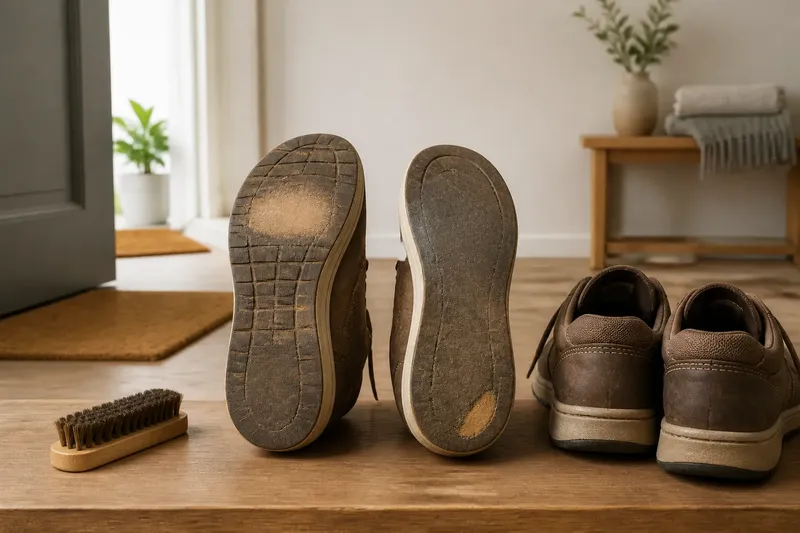
You take off a favourite pair by the door and notice a smooth patch under the ball of one foot, while the other sole is worn near the heel. A worn sole is more than a sign that shoes have seen plenty of pavement: its position can hint at where the shoe repeatedly bends and meets the ground. Reading that pattern gives you a clearer way to describe what feels wrong before you decide whether to keep wearing, seek a repair or let the pair go.
What the sole records
Each step brings a shoe into contact with the ground, then rolls the foot forward as the heel lifts. The sole meets different surfaces at different moments. Repeated pressure and friction gradually smooth, thin or roughen the tread. The result is not a perfect map of how you walk, but it can offer useful clues about where the shoe works hardest.
On many shoes, the forefoot bends as the toes push off. Look for a crease across the upper, often near the ball of the foot, and compare it with changes in the sole beneath. If a patch of tread is worn just under that crease, the two signs may point to a familiar flexing area. The crease shows where the shoe folds; the sole shows where it repeatedly meets the ground.
Heel wear has a different story. A scuffed outer corner can develop as the heel first touches down, while wear farther forward may reflect the next part of the step. But footwear design, the surface you walk on and the shoe’s fit all affect what appears. Treat a mark as a clue to describe, not a verdict about your gait.
Compare left and right shoes in good light before drawing conclusions. A mismatch may be ordinary: one shoe might meet a kerb more often, or one sole may simply have been repaired or replaced before. Note what you see without trying to diagnose the reason.
Three useful readings
There are three sensible ways to respond to a wear pattern. They suit different levels of concern, from a small visual change to a shoe that no longer feels dependable.
- Observe and keep wearing: This suits a pair that remains comfortable and stable, with wear that is shallow and not changing how it meets the floor. Keep an eye on the same area during ordinary use. If the pattern deepens or a new sensation appears, reassess rather than waiting for the sole to fail.
- Ask for a repair assessment: This suits a well-loved pair with a distinct worn patch, a sole beginning to separate or a flex point that feels unusually soft. A shoe repairer can look at the sole, upper and construction together. Describe the location and what you notice; avoid requesting a particular repair before someone has assessed whether it suits the shoe.
- Set the pair aside: This suits footwear that feels unstable, has a hole through the sole, or no longer protects the foot as intended. A worn-looking surface is not the only concern: a loose sole or sudden change in how the shoe sits can matter more. If there is pain or a persistent change in walking comfort, seek advice from an appropriate health professional.
Choose by comfort and condition, not by appearance alone. A smooth patch can be harmless for now, while a less dramatic split may deserve prompt attention.
Describe the flex point
Useful observations are specific and easy to check. Instead of saying “the shoe is worn out”, name the place: “the left sole is smooth beneath the ball of the foot” or “the crease across the forefoot lines up with a thin spot”. Add whether the change is on one shoe or both, and whether you can feel it during a normal walk.
Say you notice a crease across the right shoe’s forefoot and a shallow smooth patch directly below it, but the pair still feels comfortable. You might describe those two signs to a repairer and ask whether the sole can be assessed. The expected observable result is a clearer discussion centred on the exact area, rather than a vague request to “fix the shoe”.
A quick look works best on a dry, clean sole. Brush away grit with a soft brush so dirt does not disguise the tread, then set both shoes on a flat surface and compare their profiles. Do not force a stiff shoe to bend; its construction may not be designed for a pronounced fold.
Which response suits you?
Can a worn sole show where a shoe bends?
It can suggest a repeated contact or flexing area, especially when a sole mark lines up with a crease in the upper. It cannot, by itself, explain why the pattern formed or tell you whether your walking movement needs attention.
Is uneven wear always a problem?
Not necessarily; shoes can wear differently because of their shape, the surfaces they meet or how often each pair is worn. Pay more attention if uneven wear comes with discomfort, instability or a change in how the shoe feels underfoot.
What should I tell a shoe repairer?
Point to the exact area and describe what you have noticed, such as a smooth patch, a split or a sole that feels loose. Mention whether it is on one shoe or both and whether the pair remains comfortable; this gives the repairer a useful starting point without prescribing a fix.
When should I stop wearing the pair?
Set it aside if the sole has a hole, is separating, or leaves you feeling unstable. If walking in it causes persistent pain or discomfort, consider advice from a qualified health professional rather than relying on the wear pattern to explain the cause.
Choose by condition
The best next move depends on what the shoe does, not just what the sole looks like. If the pair feels steady and the wear is superficial, observation may be enough for now. If you can point to a particular flex point or a developing defect, a repair assessment may clarify what is possible. If the shoe no longer feels safe or comfortable, keeping it out of use is the more sensible choice.
When a label, manufacturer’s care instructions or local rules affect a decision about footwear materials or disposal, check those before acting. For everyday care, a concise description of the bend, the worn patch and the shoe’s feel is often the most useful thing you can take with you. It helps you make a choice based on the pair in front of you, rather than on a general rule about worn shoes.